

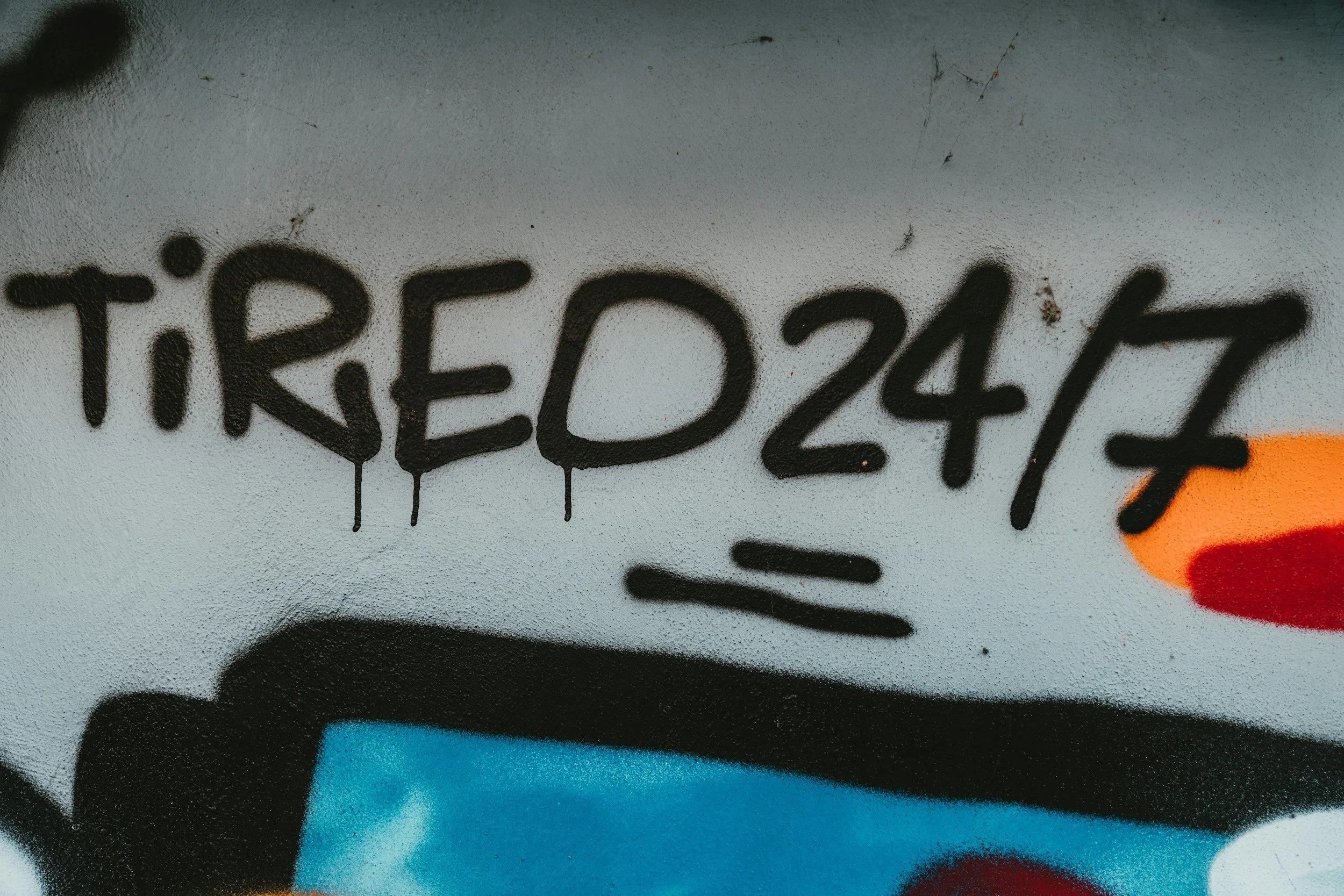
You’re still showing up. Still performing. Still the person everyone calls when something needs to get done.
You’re also exhausted in a way that sleep hasn’t fixed in months. Maybe years.
But Burned out? No, no…you’re fine.
Sure.
The Dirty Secret About High Achievers and Burnout
Here’s the thing nobody talks about: The women who are best at handling hard things are also the worst at recognizing when a hard thing is happening to them.
You've spent years — maybe your whole life — being the capable one. The reliable one. The one who figures it out. That's not just a personality trait at this point. It's your whole identity.
So when burnout shows up, you do what you always do. You manage it. You optimize. You add a supplement, adjust your schedule, download another productivity app, and tell yourself you just need to get through this one stretch.
And then the next stretch comes. And the one after that.
This is not a time management problem. This is not a self-care deficit that a bath bomb is going to fix. This is your nervous system tapping out while you keep pretending it's not.
Why You’re the Last to Know
You’ve confused functioning with ‘fine’.
You're still making it to work. Still responding to emails. Still taking care of your people. So how bad can it really be?
Pretty bad, actually. Burnout doesn't always stop you from functioning — it just makes functioning feel like dragging yourself through concrete every single day. You can be significantly burned out and still hit every deadline. The outside can look completely intact while the inside is running on fumes and spite.
Functioning is not the same as okay. I need you to write that down.
You’ve been “fine” for so long you forgot what fine actually feels like.
Burnout doesn't show up all at once. It builds so slowly that the symptoms become your new baseline. The exhaustion that won't lift? That's just how it is now. The Sunday dread? Normal. The emotional flatness where things that used to matter just... don't anymore?
Just life, apparently.
When you've been living inside burnout long enough, you stop recognizing it as burnout. You think everyone feels this way. You think this is just what adulthood feels like after a certain point. You've lost the reference point entirely.
Rest feels like something you haven't earned yet.
Somewhere along the way you picked up the belief that rest is a reward. You rest when the work is done. You slow down when you deserve it.
The work is never done. You know this.
So you keep going. And your body keeps asking you to stop. And you keep overriding it because the list isn't finished and people are counting on you and who even has time.
This is a great system until it completely isn't.
Asking for help feels like losing.
I get it. You're the helper. You're the one people lean on, not the other way around. Admitting that you need support — real support, not just a vent session over wine — feels like a betrayal of everything you've built.
It also just feels embarrassing in a way that's hard to explain. Like you should have caught this sooner. Like you should be handling it better. Like other people have it harder and you don't really have a right to be this depleted.
Here's what I'll say to that: burnout doesn't care about your reasons for ignoring it. It just gets worse.
What Burned Out Actually Looks Like in High-Achieving Women
Not a dramatic breakdown. Not crying in the parking lot (okay, sometimes that).
Usually it looks like this:
You're productive but it feels hollow. You accomplish things and feel nothing. You get the promotion, finish the project, check the box — and there's just nothing there. No satisfaction. No relief. Just the next thing on the list.
You're irritable in a way you don't recognize. Short with people you love. Saying yes when you mean no and then resenting everyone for it. Going through the motions of your relationships while secretly wanting everyone to just leave you alone.
You're tired in a way that sleep doesn't touch. Nine hours and you wake up just as exhausted as when you went to bed. You've started thinking about rest while you're doing the things that are supposed to be restful.
You've stopped caring about things that used to matter to you. Not in a liberating "I've let go of what doesn't serve me" way. In a grey, flat, hollow way that you can't quite explain.
If any of that is ringing bells — hi. That's burnout.
The Part Where I Tell You What to Do
I'm not going to tell you to drink more water and take walks…unless you need to do that anyway.
What I will tell you is this: burnout that gets managed but not treated doesn't resolve on its own. It deepens. What starts as exhaustion and detachment eventually moves into depression, physical health symptoms, and a recovery that takes significantly longer than it would have if you'd addressed it earlier.
I work with high-achieving women in California and Utah who have spent years being fine and are finally ready to stop. Not because everything has fallen apart — sometimes it hasn't yet. But because they're tired of waiting for it to.We don't do coping strategies. We do the actual work — figuring out the patterns and beliefs that drove you here in the first place, so you're not just recovering from this burnout but changing the conditions that created it.
If that sounds like what you've been looking for, let's talk.
The Short Version
High-achieving women are the last to admit they're burned out because everything in their history has rewarded them for pushing through. They're good at managing. They're good at adapting. They're good at making the depleted state work.
Until they're not.
You don't have to wait until everything falls apart to decide you've had enough of this. You're allowed to get help before it gets worse.
That's actually the smart move. And you're good at those.
